Having grown up Catholic, I never heard of Dia de los
Muertos or Day of the Dead until I move to southern Arizona, which seemed strange
to me that Catholics didn’t celebrate the same things in the same ways everywhere
(I was young and not very worldly). I moved here in 1985 with my family and
even then this was not a celebration I observed, until I married into a
Hispanic family. This is when I learned of this Hispanic/Catholic celebration
of ancestor remembrance celebrated on November 1st and/or 2nd.
Often this celebration involved cleaning and decorating the graves of family
members. Along with this, there would be a meal… often beans rice, Barbacoa de
res (beef barbeque), potato salad, salsa, tortillas, and (of course) lots of
beer. Sometimes family members would prepare meals which had been the favorite
of one of their deceased family members.
As a student of Anthropology I learned many cultures
both past and current venerate their ancestors in some way or other at this
time of the year (mid Autumn). It is thought the celebrations were typically
feast and rituals in remembrance of those who died previously, many in the
previous winter, due to freezing temperatures, old age and sometimes lack of
food. The winter was often harsh and claimed the very old, very weak, and the
young if there wasn’t sufficient food and warmth to see the group through the
winter. It’s my opinion, the celebration of ancestors during this time of year
was a way finishing up any remaining harvests, slaughter domestic livestock (which might now make it through the winter), and start hunts, which would see the
group through the coming winter. It was also a time to ask their deities and
ancestors for guidance and protection through the coming winter season. I’m
sure they also were very aware there would be those who would not see another celebration
in this life, because they were not strong or well enough to make it through
the winter.
Modern day celebrations of Dia de los Muertos are a
combination of the ancient celebrations of the ancestors (similar to what I’ve
described above) of the indigenous peoples of Mexico, Central and South America
aa well as the Catholic Holidays All souls and All Saints days. It was common for the
Catholic Missionaries to incorporate the customs of the locals when they
entered a new place. It made conversion to the church easier if the customs of
the Church appeared to be similar to those they were converting.
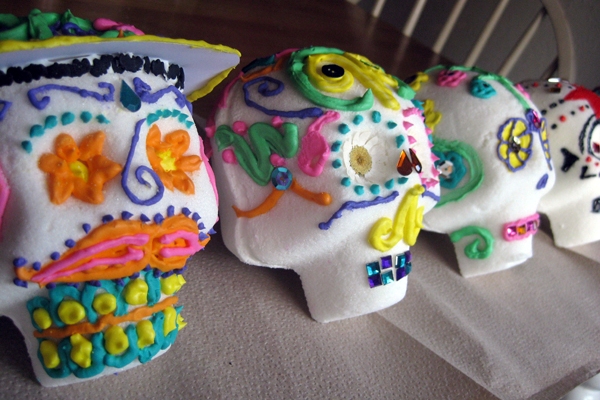
Today's celebrations include skeletons, sugar skull
candies, and other ofrendas (offerings). Ofrendas are commonly altars where the
living relatives of the dead bring and share a meal amongst each other, they
will leave a plate of food on the altar as a meal for their ancestors, because
it is believed the veil between the world of the living and the dead is at its
thinnest at this time of year, allowing those who have died previously the opportunity and ability to visit this world. In fact, it is it believe the gates to heaven are
left open on Oct 31 at midnight and algelitas (little angels) or the spirits of
all deceased children are allowed to visit their families for a day.
In the last several years I’ve noticed that many people are
celebrating Dia de los Muertos or The Day of the Dead whether they are from
these cultures or not. I think there are a couple of reasons this is happening.
The first is there are many people who are no longer practicing the religions
of their childhoods or may not have been raised in a particular spiritual path,
and they are feeling a draw to something greater than themselves and have
attempted to adopt something from another culture without really knowing why. Another
thing I think plays a big role in people adopting this holiday is the
commercialization of the celebration, making this particular day no different
than Halloween, Christmas or Easter; all of which were adopted from pre-Christian
cultures and adapted to the Church and later commercialized in today’s world. Thus the American Bandwagon... we all seem to be jumping on one or another, and in this instance it is a Spiritual Celebration that ought to be respected.
Let’s not all jump on the American Bandwagon and adopt a
celebration without first taking the time to understand what it is, second
honoring the culture you are borrowing it from. This is a big deal! It’s not ok
to run out and buy sugar skulls, or paint yourself up like one if you aren’t
actually honoring your ancestors. I know they look soo cool, but it’s not cool
to borrow another’s spirituality without knowing it and living it.
My suggestion is to learn about your ancestors and their practices, you just might find out they had rituals and practices to celebrate their ancestors during this time of year. You might also find the traditions of your ancestors were very similar to the celebrations of other cultures.
Have a Wicked Good Day!
Molly